
1win Games Withdrawal in Malaysia: Process, Verification and Status Guide
Pulling winnings out of a 1win account is usually a matter of picking a payout method and confirming an amount. The request then waits to move through review. Verification, status labels and timing raise more questions than the button itself. This page walks through how a withdrawal request typically moves from submission to payout, what identity verification generally involves, and what the different status labels mean. It also covers what to do when something doesn’t go through cleanly. For the full list of ways to move money in and out of an account, the payment methods page is the starting point.
Last reviewed: August 2026.

Key Takeaways
- A withdrawal request generally moves through a review stage before funds are released. Timing depends on the payment method chosen and how quickly identity checks clear.
- Verification (KYC) usually asks for proof of identity and proof that a payment method belongs to the account holder. It can be requested at any point, not only on a first withdrawal.
- Status labels such as pending, processing and rejected each mean something different and don’t automatically signal a problem.
- Published limits, fees and processing windows vary and change. Confirming current figures in the account cashier is more reliable than relying on a fixed number.
- Legitimate withdrawals never require paying a separate release fee or sharing a one-time password with anyone by phone or chat.
How a Withdrawal Request Typically Moves
Requesting a withdrawal on 1win generally starts in the cashier section of the account. A player selects a payout method, enters an amount, and confirms the request. From there, the request usually needs to pass an internal review before money actually moves. Operators commonly check that the withdrawal method matches the one used for a deposit and that the balance being withdrawn doesn’t include unresolved bonus conditions. They also check that identity verification is complete or has not yet been triggered for that account.
Card withdrawals, e-wallet transfers such as Skrill or PayPal, and crypto payouts in BTC, USDT, ETH, TRX, XRP, DOGE, LTC or DASH each move through slightly different rails once approved. How long that final step takes depends on the method and, for card and bank rails, on factors outside the platform’s control. The payment methods page, linked above, covers which options are generally available and how deposits and withdrawals differ by method.
For Malaysian players, local rails like DuitNow, Touch ‘n Go, GrabPay, Boost or FPX are common in the wider Malaysian payments market. Whether a specific rail is available in the cashier at any given time is something to confirm directly in the account rather than assume from general market context.
Identity Verification (KYC) Before a Payout
Most iGaming platforms run some form of identity verification before releasing a withdrawal. This is standard industry practice rather than something unique to any one operator. Typically this means confirming that a government-issued ID matches the account details. In some cases it also means confirming that a card, e-wallet or crypto address used for payout actually belongs to the account holder. Verification can be requested the first time a withdrawal is made, or later if account activity, payout method or amount triggers an additional check.
The exact documents requested, and exactly when verification is triggered, aren’t published as a fixed checklist. Following whatever the account interface asks for at the time is more reliable than assuming a document list in advance. Submitting clear, unedited copies of whatever is requested, with details matching the name on the account, is the most common reason verification clears without delay. Mismatched names or unclear uploads are a common reason it doesn’t.
Understanding Withdrawal Status: Pending, Processing and Rejected
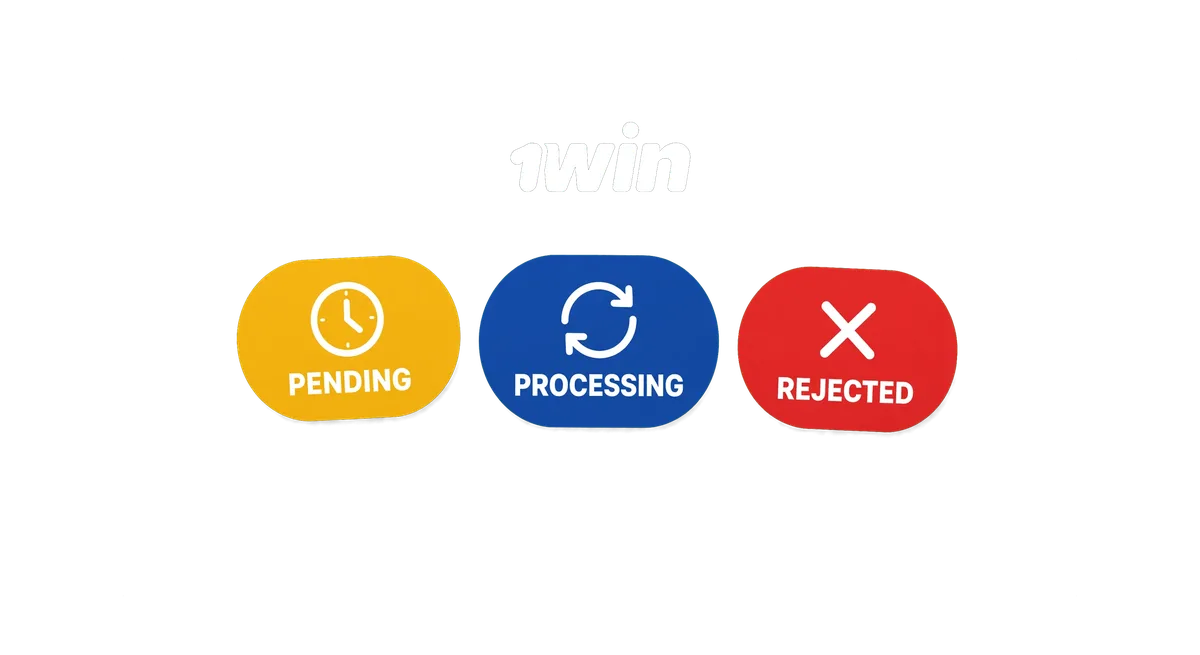
A withdrawal request generally shows a status label while it moves through review. Across most cashier systems, these labels tend to mean roughly the following, though exact wording and internal timing can vary by platform:
- Pending usually means the request has been submitted and is sitting in a queue for review. This is the normal first state for almost every withdrawal and isn’t itself a sign of a problem.
- Processing usually means the request has passed initial review and is being sent through the payment method’s own rail. How long this stage takes depends on the method rather than the platform.
- Rejected or declined means the request didn’t clear review. Common reasons include an unmatched payment method, incomplete verification, an unmet bonus condition, or a detail entered incorrectly at submission. A rejection typically returns the balance to the account rather than losing it. It usually comes with a reason worth reading before resubmitting.
Seeing a request sit in pending or processing longer than expected doesn’t automatically mean something has gone wrong. Waiting a reasonable window before assuming an issue is worth doing. Verification queues and payment rails can both add time that isn’t visible from the account side.
Limits, Fees and Processing Time
Specific minimum and maximum withdrawal amounts, fee structures and processing windows aren’t fixed figures that stay the same over time. Published figures can vary by payment method and change without much notice. Checking the current limit and any fee shown directly in the cashier before confirming a withdrawal request reflects what applies at that moment rather than a general average.
As a rough pattern across the iGaming industry, e-wallets and crypto payouts tend to move faster once approved than card or bank rails. This varies by provider and isn’t stated here as a fixed 1win-specific commitment. Any processing-time figure quoted elsewhere is worth treating as a general estimate to confirm, not a fixed promise.
Common Withdrawal Issues and Troubleshooting
A few recurring issues account for most withdrawal delays or rejections:
- Payment method mismatch. Withdrawing to a card, e-wallet or crypto address different from the one used to deposit is a common rejection reason. Using the same method for both generally avoids this.
- Incomplete verification. A withdrawal can sit in review until requested documents are submitted and confirmed. Checking the account’s notification or verification section for a pending request is worth doing before assuming an unexplained delay.
- Unmet bonus conditions. A balance tied to a bonus that hasn’t cleared its terms may not be withdrawable yet. Checking the bonus terms attached to the account clarifies this.
- Incorrect details at submission. A mistyped wallet address or account number can cause a rejection or, with crypto, a genuinely lost transfer. Double-checking details before confirming matters more with crypto payouts than with reversible rails.
When a withdrawal doesn’t behave as expected after checking these points, the support page outlines how to reach live chat, email or phone support for account-specific help.
Beware of Fake Release Fee and OTP Scams
A recurring scam pattern in online gambling involves a message, call or chat claiming a withdrawal is held. The message typically goes on to claim that a separate release fee, tax or insurance payment is needed before funds can be sent. A legitimate platform does not ask a player to pay money to receive their own withdrawal. Any message asking for payment to unlock a payout should be treated as fraudulent, not delayed processing.
A related pattern involves someone posing as support. This person asks for a one-time password, verification code, or full login details by phone, chat or email. These codes and credentials are meant to stay private. Genuine account or payment verification never requires reading a one-time code aloud to another person. If either situation comes up, the safest step is to stop the conversation. From there, reach out through 1win’s own official support channels directly, rather than through a link or number provided by the other party.
FAQ
How long does a 1win withdrawal usually take?
It depends on the payment method and whether verification has already cleared. E-wallet and crypto rails commonly move faster once approved than card or bank rails, though no fixed number is stated here as a promise.
Why is my withdrawal still pending?
Pending is the normal first state for a submitted request. It becomes worth a closer look only if it sits well beyond a reasonable window. At that point, checking the account for a verification request or contacting support is the next step.
Can a rejected withdrawal be resubmitted?
Usually yes, once whatever caused the rejection has been resolved. The balance is typically returned to the account rather than lost.
Does 1win ever ask for a fee to release a withdrawal?
No legitimate withdrawal process requires paying a separate fee to receive funds. Any such request should be treated as a scam attempt, not a normal step.
What is the fastest way to avoid delays?
Using the same verified payment method for deposits and withdrawals, completing verification promptly when requested, and double-checking account or wallet details before confirming.