
Crash Games on 1win: Aviator, Lucky Jet, JetX and Rocket Queen Explained
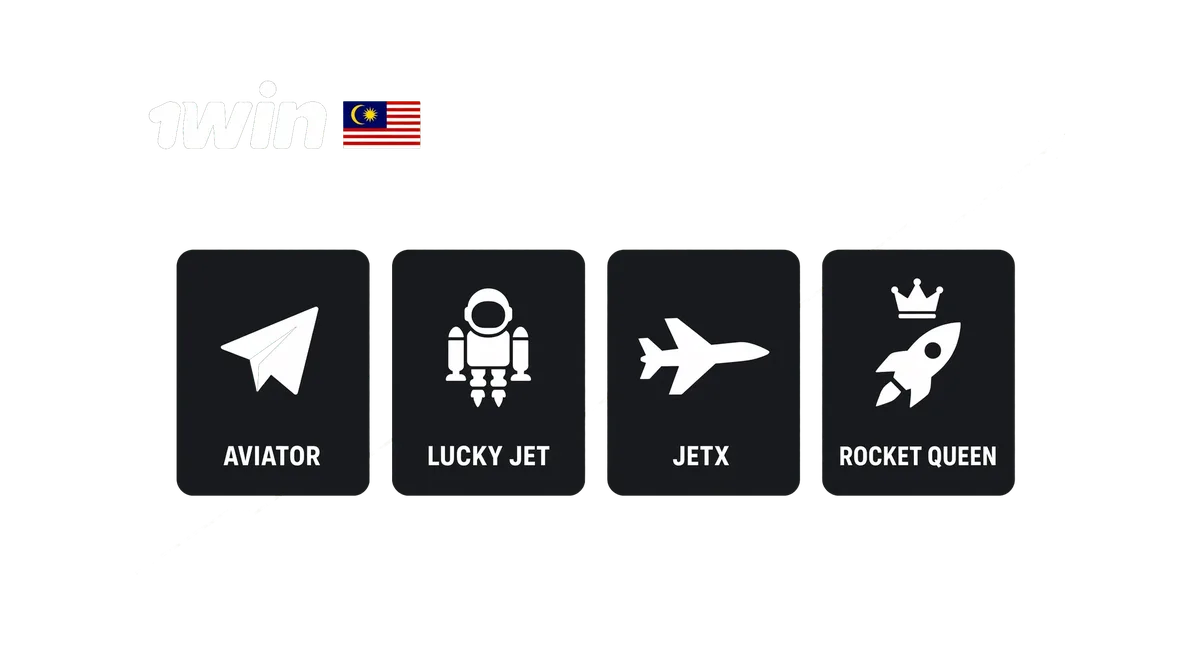
Crash games are one of the fastest-moving categories on 1win, built around a simple idea: a multiplier rises from a round’s start, and a player decides when to cash out before it stops. On 1win-game.my, four titles share this format: Aviator, Lucky Jet, JetX and Rocket Queen. This page explains how the category works in general, the shared controls behind all four games, and how the four titles compare on mechanics rather than payout. Plinko and Mines aren’t part of this comparison since they use a different core mechanic. Each is covered on its own page. For game-specific detail, each title’s dedicated page is linked below.
Last reviewed: August 2026.
Key Takeaways
- A crash game runs a rising multiplier each round. Cashing out before the round ends locks in that multiplier, and not cashing out in time forfeits the round.
- Aviator, Lucky Jet, JetX and Rocket Queen are the four crash-style titles covered on this site. Plinko and Mines use different mechanics and aren’t crash games.
- Manual and auto cashout are the two main ways to lock in a multiplier. Auto cashout only automates timing, it doesn’t change round outcomes.
- No round outcome in these games is predictable, and no game here is presented as paying more than another.
What Is a Crash (Multiplier) Game?
A crash game, sometimes called a multiplier or instant game, runs on a simple repeating structure. Each round starts at a base multiplier, that multiplier climbs for as long as the round continues, and at some point the round ends, at which point any bet not already cashed out is lost. The player’s only real decision during a live round is when, or whether, to cash out before that happens.
This format runs much faster than a typical casino table game or slot spin, since rounds are short and continuous, one after another, with a new round starting again almost immediately after the last ends. That pace is part of what distinguishes crash games from Plinko (a single drop settled instantly) and Mines (a slower, tile-by-tile manual pace). The category is defined by the rising-multiplier, cash-out-before-it-ends structure specifically.
Manual and Auto Cashout, Explained
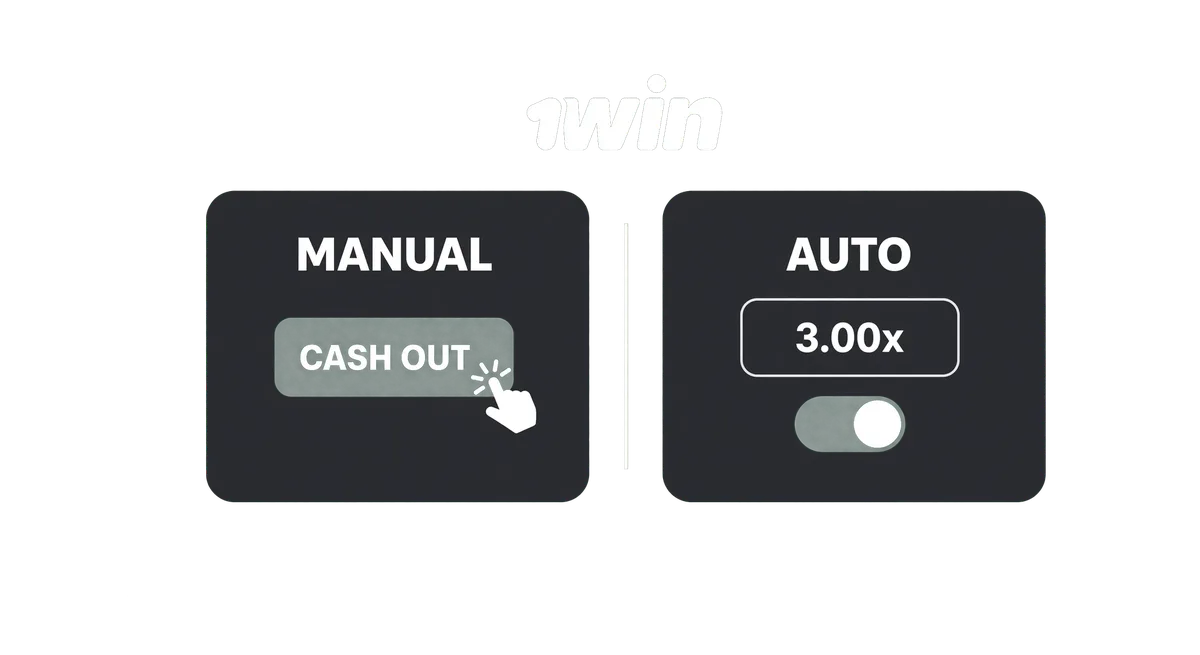
Manual cashout means tapping or clicking a cashout button at the moment a player decides to lock in the current multiplier, which requires watching the round as it climbs and reacting in time. This gives full control over timing but depends on attention and reaction speed, especially in a fast-moving round.
Auto cashout lets a player set a target multiplier before the round starts. If the round reaches that multiplier, the cashout happens automatically without needing to react in the moment. This is available across Aviator, Lucky Jet, JetX and, typically, Rocket Queen, though exact interface details can differ slightly between titles. Setting an auto cashout target doesn’t change how likely a round is to reach that multiplier. It only automates the action of cashing out if and when the round gets there, so it doesn’t make any round outcome predictable.
Rounds, Multipliers and Risk
Each round in a crash game is independent of the ones before and after it. A long run of low multipliers doesn’t make a higher multiplier more or less likely on the next round, since these games don’t work on a pattern that can be tracked from past rounds. Risk in a crash game comes down mainly to bet size and cashout timing: a bet cashed out early locks in a smaller multiplier with more certainty, while waiting longer risks the round ending before a cashout happens, in exchange for a potentially higher multiplier if it doesn’t.
Published RTP and multiplier-range figures for these games vary by source and aren’t independently confirmed beyond commonly cited ranges here. Treating any specific percentage as current and checking each game’s own info panel is the more reliable habit than relying on a fixed number repeated elsewhere.
Fairness and RNG: What «Provably Fair» Generally Means
Crash games, like most instant and slot-style games, run on a random number generator (RNG) that determines each round’s outcome independently. The term «provably fair,» used across the wider iGaming industry, generally refers to a method that lets a result be mathematically verified after the fact, typically through a cryptographic hash published before a round and a seed revealed afterward, so a player can check that the outcome wasn’t altered once it started.
No specific certification body or independent audit is confirmed here for the four titles covered on this page. This section describes what the term commonly means across the industry rather than asserting a specific fairness certification for these games. Checking a game’s own info panel or terms is the way to see what, if anything, is stated about its own RNG or fairness approach.
Comparing the Four Crash Titles on 1win
The table below compares Aviator, Lucky Jet, JetX and Rocket Queen on mechanics and features rather than on payout, since published payout figures vary by source and aren’t independently confirmed beyond general ranges.
| Game | Provider | Core Mechanic | Auto Cashout | Demo Mode | Mobile |
|---|---|---|---|---|---|
| Aviator | Spribe | Rising multiplier, plane visual | Yes | Yes | Yes |
| Lucky Jet | 1win Originals | Rising multiplier, character visual | Yes | Yes | Yes |
| JetX | Smartsoft | Rising multiplier, jet visual | Yes | Yes | Yes |
| Rocket Queen | Not confirmed | Rising multiplier | Yes (typically) | Not confirmed | Yes |
None of the four is presented here as better for winning. The differences between them are mainly visual theme and interface detail, not underlying odds.
Which Crash Game to Try First
Choosing between these four comes down to preference rather than any confirmed payout edge. Some players prefer Aviator or JetX for their long-running visual style and wide recognition. Lucky Jet’s 1win Originals build gives it a slightly different interface, and Rocket Queen sits in the same category with a different visual theme. Trying each in its demo mode, where available, is a reasonable way to compare interface and pace before wagering real funds, since demo balances let the mechanic be tested without financial risk. Full detail on each game’s specific controls, settings and demo availability lives on its own dedicated page. The game comparison page also lines up all six games on this site, including Plinko and Mines, side by side.
FAQ
What makes a game a «crash game» specifically?
A rising multiplier each round that a player cashes out before it ends. Aviator, Lucky Jet, JetX and Rocket Queen use this format on 1win.
Is Plinko a crash game?
No. Plinko is a drop-and-rows game with a single settled outcome per drop, not a rising multiplier.
Does auto cashout make winning more likely?
No. It only automates when a cashout happens if a chosen multiplier is reached. It doesn’t change the odds of a round reaching that multiplier.
Are these games provably fair?
They run on RNG, and «provably fair» is a general industry term for verifying outcomes after the fact. No specific certification is confirmed for these titles here.
Which crash game should a beginner try first?
There’s no confirmed payout reason to prefer one over another. Trying each in demo mode, where available, is a practical way to compare pace and interface.